One full-body photo plus one good prompt is all you need. Here are ten dance prompts that keep faces stable and motion smooth.
VideoImage-to-video9:16
The trend
What is the AI dance video trend?
AI dance videos turn a still photo, of yourself, a friend, a grandparent, a pet or a drawing, into a short clip of that character dancing. Image-to-video models like Kling, Jimeng and Hailuo animate the photo from a text prompt, while motion-transfer tools like Viggle copy the moves from a reference dance clip onto your character.
The format works because the surprise is instant: a serious office headshot suddenly busts out a viral routine, or a cat does a K-pop chorus. Clips are usually 5–10 seconds, vertical 9:16, and synced to a trending sound added afterwards in CapCut or the app itself.
Use photos you have permission to use. Only animate yourself, people who said yes, pets, or original characters. Don't make dance videos of minors you don't look after, and never use AI dance clips to mislead people.
How to
How to make an AI dance video for free
Choose a full-body photo
Whole body in frame, arms and legs visible, simple background, good light. Tight or cropped photos make the model invent limbs.
Pick a tool
For a text-prompt dance use Kling or Jimeng image-to-video. To copy a specific routine, use Viggle or Kling's motion-control feature with a reference clip.
Upload and paste a prompt
Copy one of the prompts below. Keep the camera mostly static. Fewer camera moves means steadier faces.
Generate 5–10 seconds in 9:16
Short clips stay cleaner. Generate two or three versions and keep the one with the most natural hands and feet.
Add the music
Drop the clip into CapCut or your posting app and add the trending sound there, timed to the beat.
Guide
Tips for smooth AI dance videos
The photo decides most of the result
Image-to-video models can only animate what they can see. A full-body photo with arms and legs clearly separated from the body gives the cleanest motion. Plain backgrounds help, because the model does not have to guess what is behind a moving arm. Loose clothes look great in motion but can hide where the legs are; fitted clothes are safer for fast routines.
Describe motion, not just a dance name
Models do not know every TikTok routine by name. Instead of only writing the song or dance title, describe the movement: 'bounces on the beat, swings arms side to side, spins once, ends with a pose'. Two or three moves in a 5–10 second clip are plenty. More moves usually means more blurry limbs.
Keep the camera still
Every camera move adds work for the model and increases the chance that faces drift. For dance clips a static camera, or a slow push-in, looks closest to a real phone video. Add 'static camera, full body in frame' to the prompt if the dancer keeps getting cropped.
Choose the right tool for the job
Text-prompted image-to-video (Kling, Jimeng, Hailuo) is best when you want an original routine. Motion-transfer tools such as Viggle copy the exact moves from a reference video onto your character, which is better when you want to match a specific trending dance.
Finish it in an editor
Most AI video models produce silent clips or generic sound. Add the music afterwards in CapCut or the posting app, trim the first and last half-second where motion is often stiff, and line up a clear move with a strong beat. Mark the video as AI-generated where the platform asks you to.
Prompts
10 copy-ready AI dance prompts
Written for image-to-video: upload your photo first, then paste. Replace the setting or style as you like.
10 of 10 shown
#01
Viral rooftop routine
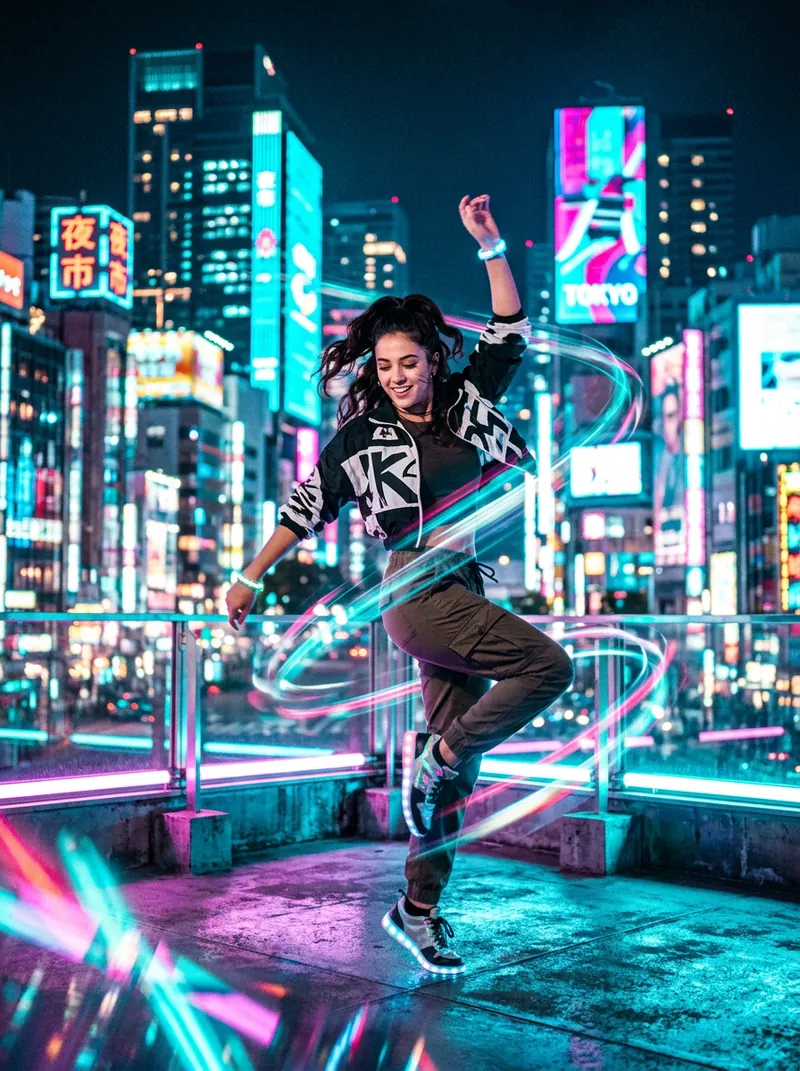
The person in the photo performs an upbeat viral TikTok dance on a neon-lit city rooftop at night: hip sway, arm waves, a quick spin and a confident pose to finish. Full-body shot, static camera at chest height, smooth natural motion, hair and clothes moving with the beat, face consistent with the photo, 9:16, 8 seconds.
The character dances a sharp, synchronized K-pop chorus choreography on a glossy stage with colourful LED screens behind: crisp arm hits, footwork, a hair flip and a wink at the camera. Full body, front-facing static camera, concert lighting with pink and blue spotlights, energetic but precise motion, 9:16, 10 seconds.
K-popstage
中文版 Chinese version
角色在光亮的舞台上跳一段利落整齐的 K-pop 副歌编舞,身后是彩色 LED 大屏:干脆的手臂卡点、脚步动作、甩头发,最后对镜头眨眼。全身,正面固定机位,粉蓝聚光灯的演唱会灯光,动作有力且精准,9:16,10 秒。
#03
Grandma's disco night
The elderly person in the photo dances joyfully to 70s disco under a spinning mirror ball: finger pointing up and down, shoulder shimmies, a little twirl, big happy smile. Retro living room turned dance floor, warm colourful lights, full-body static shot, gentle and natural motion suited to their age, 9:16, 8 seconds.
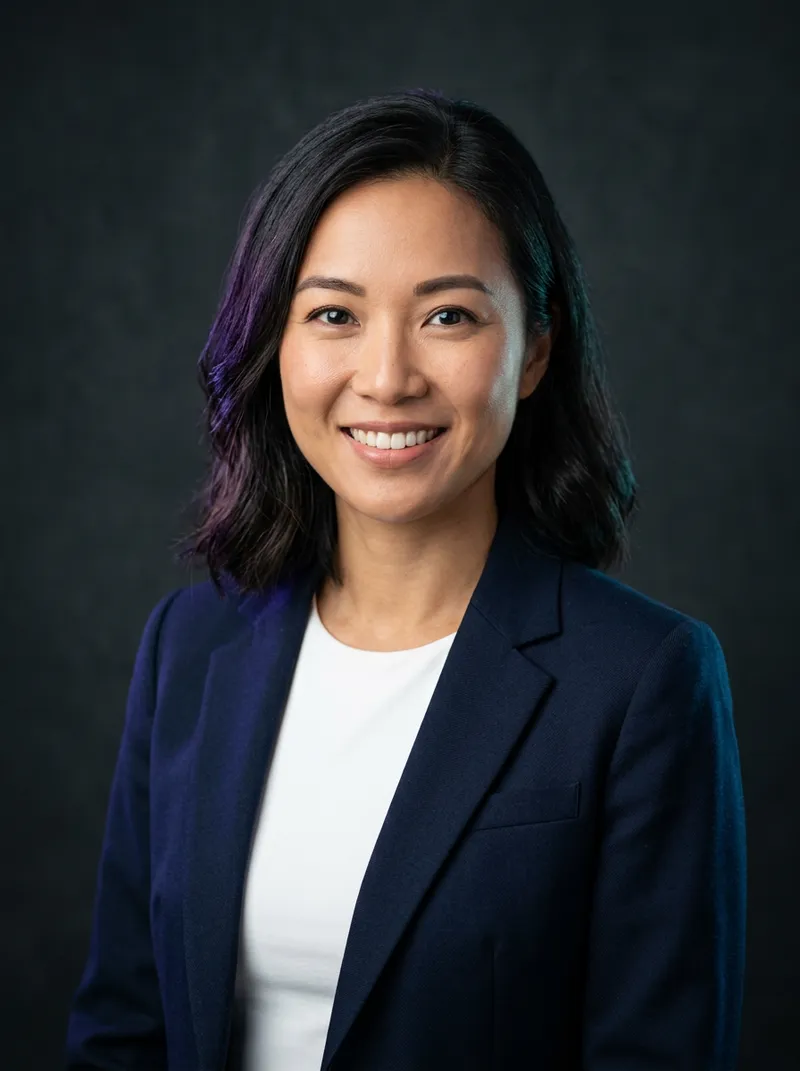
The person in the business headshot suddenly breaks into a smooth hip-hop dance in a modern office: shoulder bounce, slide step, a quick body roll, then straightens their blazer and returns to a serious pose. Medium-wide static shot, bright office lighting, comedic timing, realistic motion, 9:16, 8 seconds.
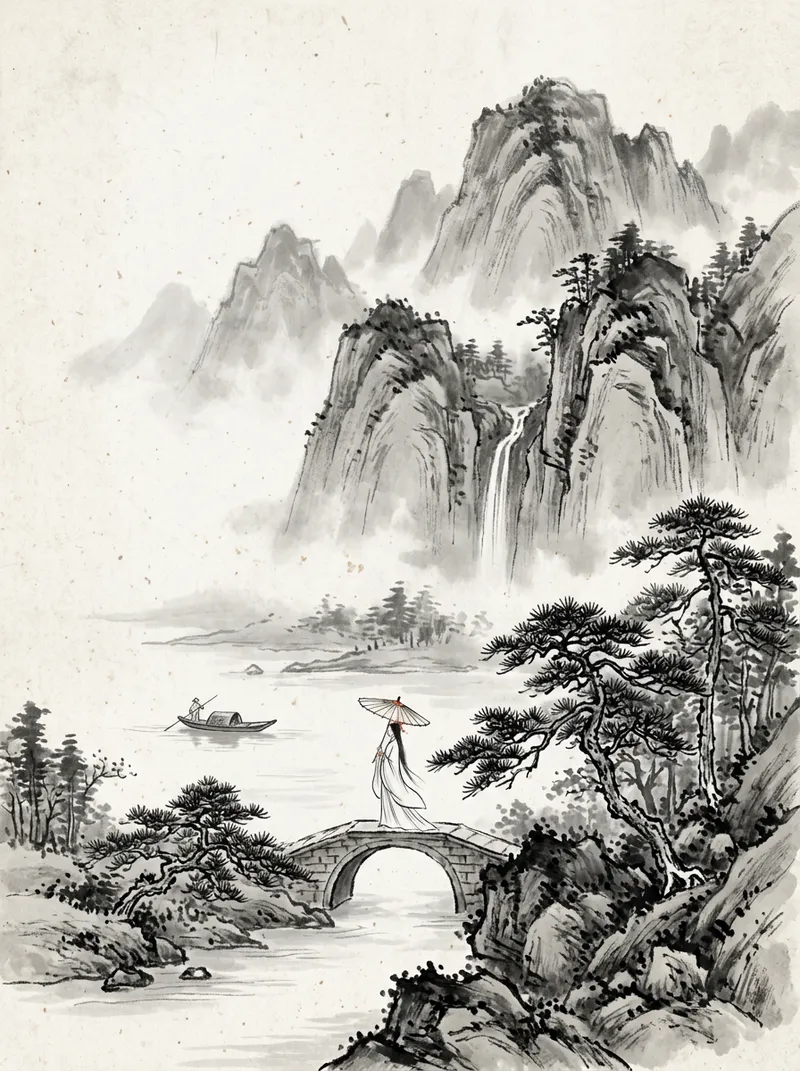
The figure in the photo performs a graceful Chinese classical dance in flowing hanfu with long water sleeves, slow turns and sleeve throws, ribbons trailing in the air. Misty ink-wash landscape background, soft diffused light, elegant slow-motion feel, full body, static camera, 9:16, 10 seconds.
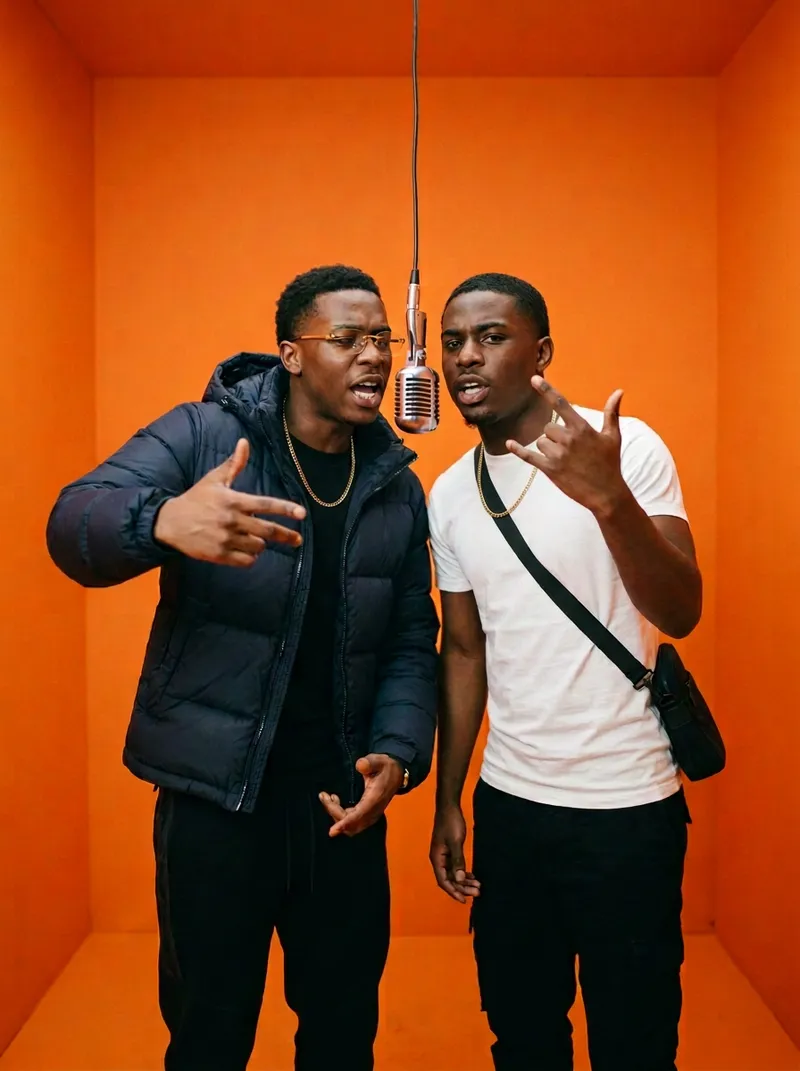
The person in the photo dances in a street dance cypher under a graffiti-covered bridge: top rock, footwork, a freeze pose, crowd silhouettes cheering around them. Low-angle full-body shot, slightly handheld feel, late afternoon golden light, dynamic but clean motion, 9:16, 8 seconds.
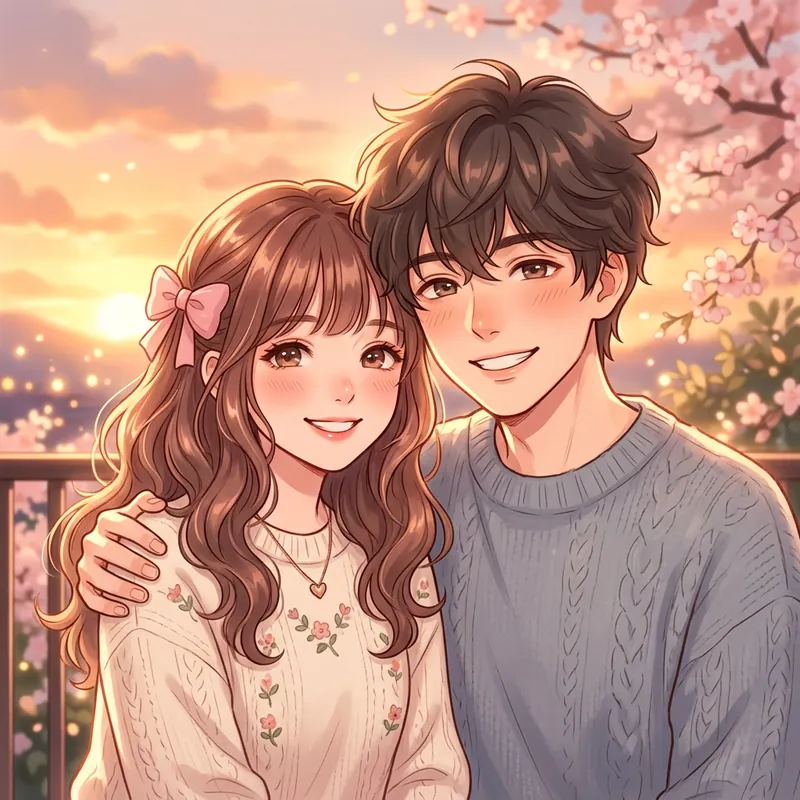
Turn the person in the photo into an anime idol and have them dance a cheerful idol routine on a sparkling stage: heart hands, side steps, a spin with a glowing skirt or jacket flare. Japanese anime style, cel shading, floating light particles, pastel colours, full body, static camera, 9:16, 8 seconds.
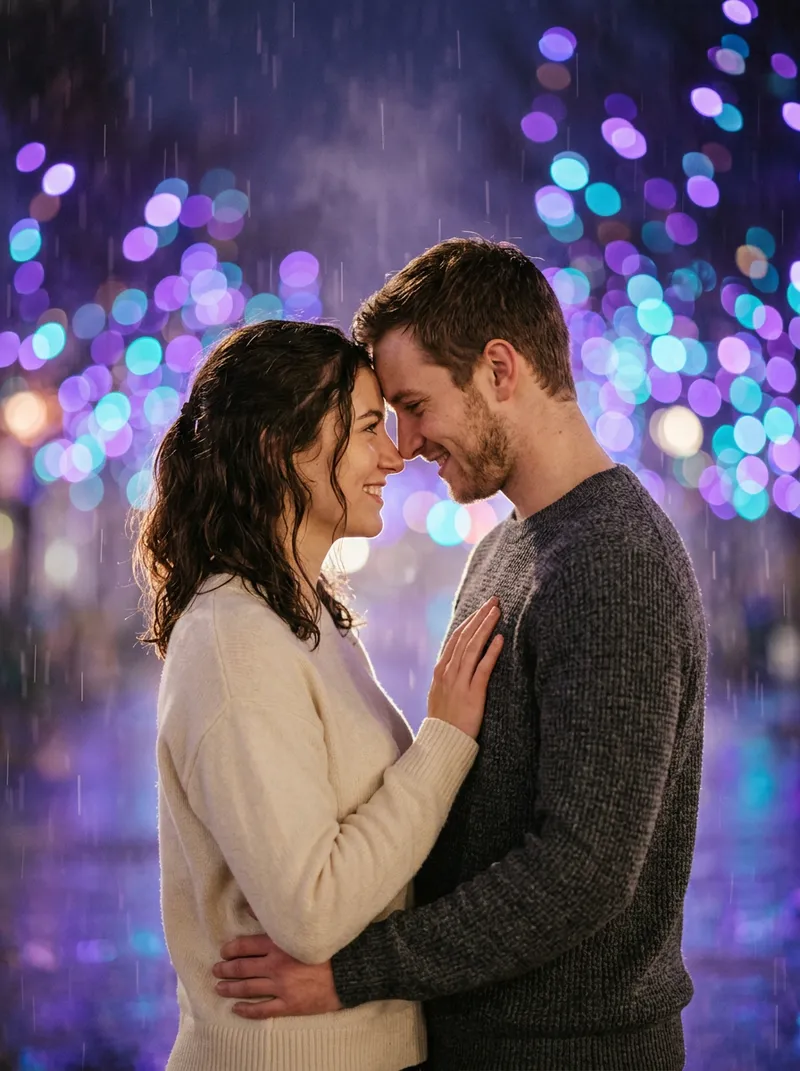
The couple in the photo share a romantic slow first dance in a candle-lit garden at dusk: gentle sway, a slow spin, a dip at the end with a soft laugh. String lights overhead, warm bokeh, medium-wide shot with a very slow push-in, natural motion, faces consistent with the photo, 9:16, 10 seconds.
The pet in the photo stands on its hind legs and dances playfully to a funky beat in a colourful living room: paw waves, little hops, a tail wag in rhythm, head bobbing. Keep its fur colour and markings exactly, cute and comedic, bright lighting, static full-body shot, smooth motion, 9:16, 6 seconds.
The person in the photo dances an expressive contemporary solo on a rain-soaked street at night, splashing through puddles, arms reaching up to the falling rain, a slow spin under a streetlight. Cinematic teal and amber colour grade, reflections on wet asphalt, full body, slow side-tracking camera, emotional and fluid motion, 9:16, 10 seconds.
Yes for short clips. Kling, Jimeng, Viggle and Hailuo all give free daily or starter credits at the time of writing, enough for a few 5–10 second dances. Watermarks and limits vary by tool.
Why do the hands and feet look weird?
The model is guessing parts it can't see. Use a full-body photo with limbs visible, keep the camera static, ask for “smooth natural motion” and generate shorter clips.
Can I copy a specific TikTok dance?
Use a motion-transfer tool (Viggle, or Kling's motion-control feature) with a reference clip of the routine. Text prompts alone give a dance in the style you describe, not an exact routine.
Can I make my pet dance?
Yes. Pets work surprisingly well. Use a clear photo of the whole animal and describe the dance in a playful way, like prompt #9 below.
How do I add music?
Most image-to-video tools output silent or AI-scored clips. Add the trending sound in CapCut or directly in TikTok/Douyin so it is properly licensed for the platform.